
Why health must become the new norm in area development
Miranda Venekamp-Brandt on the role and responsibility of developers
VanWonen develops homes and living environments for the healthiest generations. This is a conscious choice deeply rooted in the company’s mission, says Miranda Venekamp-Brandt, Director of Marketing, Sales & Rental Operations at VanWonen. She challenges her industry with a fundamental question: given that our living environment clearly affects our health, why isn’t health already a standard prerequisite for area development? What responsibility do you take as a developer regarding social interaction, physical activity, green spaces and social cohesion? And how do you translate social responsibility themes into concrete design choices for an area? Miranda explains how health became a structural part of the VanWonen mission and why she believes area developers must step up their game in this regard.
Developing for the healthiest generations
“As an area developer, you have a social responsibility. Especially when you are not just building houses, but are developing entire living environments,” says Miranda Venekamp-Brandt.
The physical living environment influences people’s health on multiple levels: directly, through factors such as air quality, noise pollution, heat stress and exposure to particulate matter or UV radiation. And indirectly, through behaviour: how people get around, whether they interact with each other, how much greenery they experience, and whether they feel safe in their neighbourhood.
“The choices we make as developers determine things like how much shade there is, how much greenery is added,” explains Miranda. “And we also influence whether physical activity becomes second nature and whether social interaction is possible. All this has a direct impact on people’s health and vitality.”
She draws attention to the inequality in Dutch society. “People who grow up in less healthy living environments – with for example less green spaces, more pollution, fewer facilities, and a smaller social network – live shorter lives on average and spend fewer years in good health. I find that difficult to accept. It’s not fair that your birthplace and the circumstances in which you grow up can be so detrimental to your health.”
That is why she doesn’t see health as a mere ‘nice-to-have’. “If we can influence how a living environment is designed, that is a great opportunity. We must take health as seriously as sustainability. It should be an inherent part of area development.”
From sustainability to living a vital life
Sustainability has taken a solid hold in regulations and everyday practice over the last few years. “We now have clear legal guidelines for the environment,” Miranda says. “Take, for instance, carbon emissions, energy performance requirements and climate adaptation. But we are still seeing a gap in regulations for health and vitality.”
VanWonen chose not to wait for government regulations. In its ESG manifesto, the company explicitly focuses on the well-being of both the planet and people. This commitment led to internal guidelines for vital living and the achievement of an official ESG rating – a first for an area developer in the Netherlands.
“We choose to take the lead. Our area developments touch on the big issues of our time: from inequality in health to loneliness and heat stress. Knowing our choices shape these outcomes means we can’t just stand by. We have a responsibility to use our influence for the common good, purposefully and proactively. To actually make a difference.”
Social interaction as a design strategy to combat loneliness
Miranda points to loneliness as an example. It is a major, relevant issue in society, influenced in part by people’s living environment. A silent factor that profoundly impacts well-being and health.
“We can design living environments that foster connection. Think shared courtyards. Communal spaces. Benches in green surroundings. Walking routes that encourage social interactions. It’s about creating spots where different generations can cross paths. By doing this, you’re giving people opportunities to engage with each others socially. When you make this a core part of your design, you might help decrease feelings of loneliness.”
VanWonen develops for a variety of target groups: first-time home seekers, families, older people. That calls for a living environment that reflects society. With a focus on the social issues that matter. “This very diversity offers an opportunity to create a healthier living environment where meeting and connection are central,” Miranda points out.
Working with the experts
According to Miranda, more and more developers recognize the importance of health. Yet, she feels that all too often it doesn’t go beyond good intentions. That is why VanWonen explicitly chooses to collaborate. With knowledge institutions, health foundations and civil society organisations.
“We are developers. Not health experts. Suppose you want to make an area wheelchair-friendly. You remove thresholds and think you have done well. But if you don’t account for turning radiuses, reachability or sightlines, you still fall short. That’s why you need experts. People who deal with these challenges on a daily basis.”
This mindset is baked into the VanWonen culture. Future residents are also structurally involved in our home designs. The team actively encourages dialogue. “We don’t say: ‘we know best’. We want to learn. To test. To make it better together. And we need partners for that.”
A broadly supported health movement
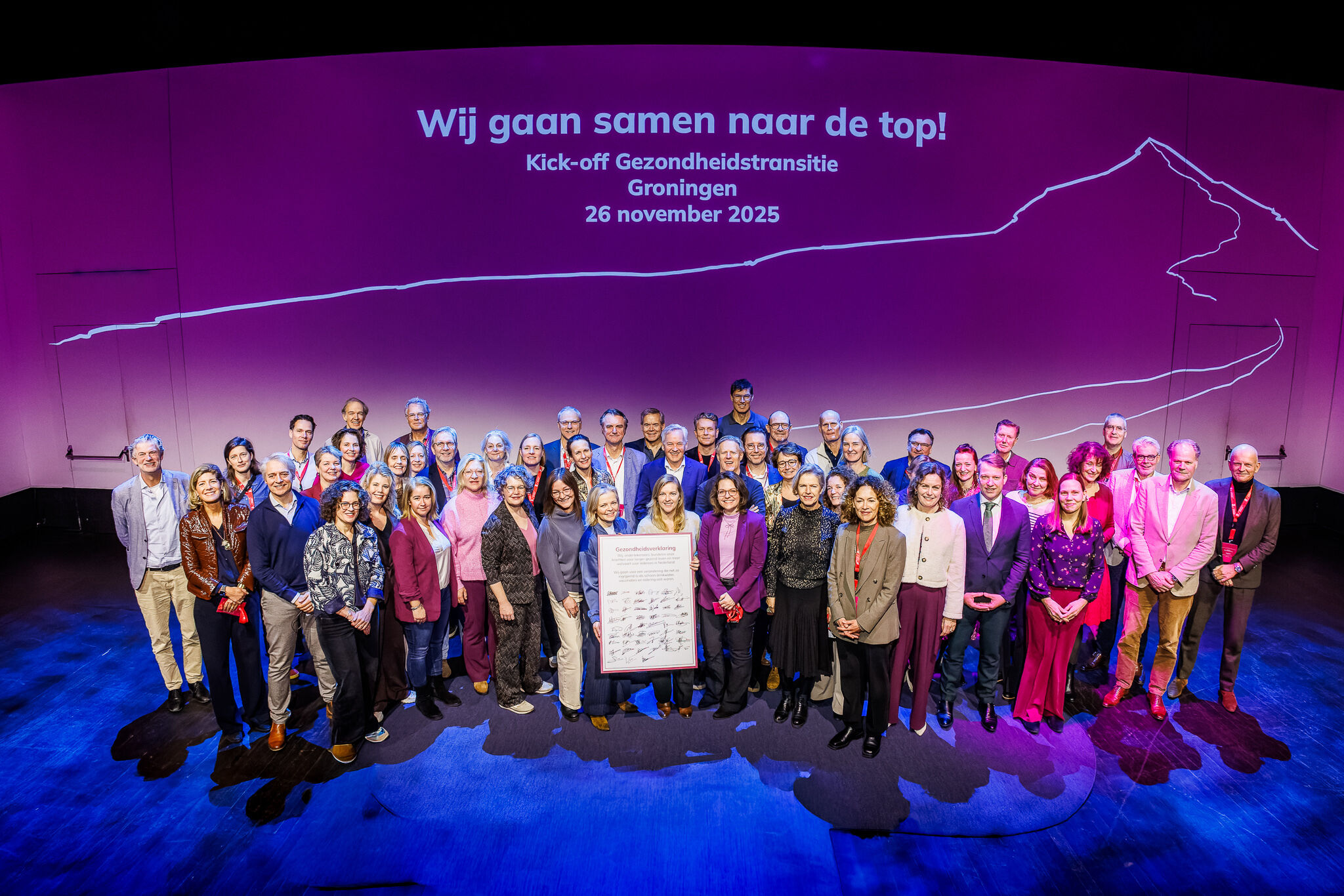
VanWonen has joined a frontrunner coalition of dozens of parties (alongside twenty-three health foundations) that are dedicated to a healthy future. In November 2025, Miranda signed the Health Declaration on behalf of VanWonen: “By doing so, we commit ourselves to a movement that aims to structurally embed health within policy, the economy and daily life.”
The shared goal: by 2040, healthy living will be a matter of course for many more people, thanks in part to an environment that actively encourages this. “Good intentions alone are not enough,” says Miranda. “This year, we are working toward a health summit in November to put health higher on the political agenda.”
Health partnerships and initiatives
In addition to this coalition, VanWonen is involved in several other health-related partnerships. A prime example is their joint initiative with Hanze University of Applied Sciences, the municipality of Groningen and the UMCG to appoint a ‘professor in Healthy Cities’. Miranda: “This is helping us gain deeper insights into how to create living environments that foster the health and well-being of people.”
In 2022, VanWonen became the first area developer to partner with Gezondheidsfondsen voor Rookvrij (health foundations for a smoke-free Netherlands) – an alliance between the Dutch Heart Foundation (Hartstichting), the Dutch Cancer Society (KWF), and the Dutch Lung Foundation (Longfonds). This means that in all projects, smoke-free zones are created, so that children can grow up, play and live in a healthy environment. We lead by example: our internal operations are also 100% smoke-free.
Furthermore, VanWonen will soon sign the Sun Covenant of the Dutch Skin Foundation (Huidfonds). In doing so, the company expresses its commitment to actively creating sun-safe living environments to prevent skin cancer. Within projects, explicit attention is given to the creation of shaded areas and sun protection.
Finally, for the second year running, VanWonen is a co-initiator of the Blue Zone Festival, which takes place on 16 April 2026. To Miranda, the event is a meeting place for various sectors, bringing together developers, policymakers, healthcare professionals and other experts. “We want to inspire there, but above all, be inspired ourselves. You have to step out of your own bubble. Otherwise, you’ll just keep doing what you’ve always done. We shouldn’t approach health based on assumptions, but on knowledge.”
From Blue Zones to Purple Zones
Inspired by the Blue Zones, VanWonen introduced the concept of ‘Purple Zones’. This is a way of translating health ambitions and partnerships into concrete area development projects, with a nod to the brand’s purple colour.
Blue Zones are places in the world where people live longer, healthier and with more vitality. Miranda and her colleagues investigated which factors from these areas are relevant to area development and where they can actually make an impact.
This gave rise to three pillars, which are central to the Purple Zones:
- Meeting – including social cohesion, communal spaces, community gardens.
- Physical activity – including walking routes, visible staircases, sports facilities.
- Healthy living – including greenery, shade, smoke-free environments, attention to heat stress and sun safety.
“It’s not just theory,” Miranda emphasises. “We apply these principles directly to our projects.” This includes designing shady and smoke-free playgrounds, installing AEDs upon the completion of projects, along with giving CPR training to residents, and providing sunshades at construction sites to protect workers from UV radiation. “Some of these choices are relatively simple,” Miranda notes. “But it’s precisely those choices that make the difference in how healthy a living environment ultimately becomes.”
For the healthiest generations
When speaking with Miranda, it becomes clear that health is more than a mere strategic objective; it touches on something personal. “It weighs on me how much our well-being is tied to things beyond our control, like the neighbourhoods we grow up in and the chances we're given” she says.
That commitment extends beyond her professional life. For instance, she volunteers in a hospital’s paediatric ward, coaches her daughter’s field hockey team and serves as a confidential advisor for the hockey club. “I believe in empowering people,” she says. “Sometimes all it takes is a little encouragement.”
She applies that same philosophy to her work. There, too, it’s sometimes about giving that extra nudge. The right living environment can encourage people to be more active. To interact with others. And to feel safe and seen. “A well-designed neighbourhood can make the difference between staying inside or going outside. Between living next to each other as strangers or actually getting to know one another.”
Miranda is realistic enough to know that VanWonen cannot solve the major societal issues single-handedly. “We can’t change the world on our own,” she admits. “But every area development is an opportunity. And in those projects, we enjoy collaborating with others to translate our goals into a broadly supported movement.”
For her, Purple Zones are a way of putting responsibility into practice. Not just talking about health, but actually doing something about it. “When you develop living environments, you are also working on health. That requires taking responsibility and making conscious choices. To foster social interaction, physical activity and greenery. For places where people live longer, healthier lives. That calls for ambition. Not waiting for regulations to catch up. Not relying on vague intentions. Doing what’s necessary. For the healthiest generations, both today and thirty years from now.”